Te Kete Ipurangi Navigation:

Te Kete Ipurangi
Communities
Schools

Te Kete Ipurangi user options:


New Zealand Curriculum Online navigation

Using language, symbols and texts to explore art and identity

Video Help

You need javascript enabled to view this content.

Duration: 05:04

Views: 266

Download the video clip for FLV player (27 MB)

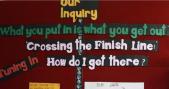
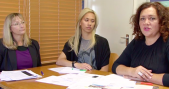
Sylvia Park's inquiry planning team support all teachers to develop authentic engaging learning for their students. In this story students and teachers tell us about an inquiry that strengthened the key competencies.

There are three stories in this series:

  1. Our inquiry framework
  2. Using language, symbols, and texts to explore art and identity
  3. Effective pedagogy for our Māori and Pasifika students

Transcript

Transcript

We’re really clear that our curriculum at Sylvia Park School is based on outcomes, so the thing that we do, is we, you know, hand on heart we say that if our children don’t leave here without tangible outcomes then really our work has been for nothing. But I guess the other thing that we talk about is in terms of delivering a curriculum at this school, we want to make sure that it’s balanced so that means that it covers all the areas of the curriculum because we want to make sure that it’s interesting, that the children have exposure to a wide range of stuff, and the other thing is that we want to make sure that it reflects our community, so we think about the children that are in our school, we think about where we’re located and we think about that diversity and making sure that whatever we do is going to hook those children in our community.

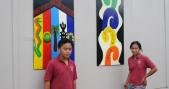
Our mural in our classroom - our topic was we are different but the same. The things that make us different is our culture, and things that make us the same is things that we wear like shoes and sports maybe and a lot of people like music. Yeah, and for Banksy we also did some graffiti and kind of 3D but then we couldn’t make it that much so we tried our best and that was all about art. Trying your best.

Our mural is called a pot of gold because on our mural we have all the rainbow colours. And as they say at the end of every rainbow there’s a pot of gold. Our mural is based on the idea of a rainbow, and it’s made up of all the colours that represent the different cultures in our school which is combined by one common thread which is the maroon colour, which is our school colour, which represents us as a family. It shows us different windows of opportunity starting with maths with the overall plus sign - and it’s also divided into four key areas, which is maths, reading, writing, inquiry or topic. The rainbow colours signify peace and happiness and harmony. This means joining together to form everlasting relationships so that we can take this with us when we leave school. It’s simple, yet sophisticated. We were influenced by Dagmar Dyck Leonardo Da Vinci, and the skills that we took from Dagmar Dyck were the cultural symbols and the colours, and from Leonardo Da Vinci we took the textures for effect. And it has been built through teamwork together because together we can conquer anything.

I’ll talk about Nga Rangatira that means ngā Rangatira mō āpōpō that means the leaders of tomorrow. So as tuakana we should teach the teinas to become more sophisticated and mature so they can pass those leadership skills on to the teinas in the future.

Another mural we created was Ahurea which represents all our different cultures coming together as one for the love of learning. And it shows how we try to move up a level, in all of our learning such as maths, reading and writing.

And then the other mural that we created was Aroha that represented taking the journey of learning together as one instead of separated and individually. So if times get hard they can push each other to the limit and so they could stay focused on their work and try hard.

Our mission statement, our vision for our children is about setting children on a path of lifelong learning. And if we really believe that, one of the things that we talk about a lot is how do we really make sure that children will leave here and we can say they are actually ready to take on learning and be a lifelong learner. And one of the things that we know that we do in schools we do a lot of assessment that’s based around formal type assessment, so we do asTTle, PAT’s and STARS and school entry assessment and those types of things. But those things don’t tell us about our children’s growing ability to be learners and to be learners beyond school. So the thing that we’ve talked about a lot and the reason that we’ve developed our inquiry in a particular way is to really think about how we assess our children at a much higher level with those things as sort of fundamentals, but how we really think about how our children engage in the inquiry process, developing key competencies, and us developing our ability to assess our children’s growing competency and then be able to say eventually that our children are truly able to grow into children who are able to become lifelong learners and do stuff well beyond what happens at school so it becomes real and it becomes lived. That’s been a really big part of our journey in terms of framing up the inquiry and delivering it in the way that we do.

Tags:
art
inquiry
key competencies
principles
using language symbols and texts

Comments

    Cancel

    Add comment

    Required fields are marked *

    Terms and conditions


    LEGAL AND PRIVACY STATEMENT


    Copyright


    This website and its contents including pages, documents, online graphics, audio and video are subject to copyright laws of New Zealand and, through international treaties, other countries. The copyright is owned by the Ministry of Education (New Zealand), unless indicated in the body of the document.


    Copyright protects the original skill and effort of an author of copyright works from unauthorised replication of that work.


    For material copyright to the Ministry of Education:


    You may view this website and its contents and save an electronic copy, or print out a copy, of parts of this website solely for your own information, research or private study, but only if you:


    (a) do not modify the copy; and
    (b) include the copyright notice "© Ministry of Education, Wellington, New Zealand" on the copy.


    You must not reproduce, transmit (including broadcast), adapt, re-distribute or otherwise exercise the copyright in the whole or any part of this website for any other purpose except with the prior written consent of the Ministry of Education and any conditions specified by the Ministry.


    For material with third-party copyright:


    The permission to reproduce Crown copyright-protected material does not extend to any material on this site that is identified as being the copyright of a third party. Authorisation to reproduce such material must be obtained from the copyright holders concerned.


    Privacy statement


    You may browse and access information on this website without providing any personal information. Where you voluntarily provide information, we will only use that information to communicate with you. We will keep your personal information secure and will not disclose it to any third party. If you want to check personal information that we hold, please write to:


    The Privacy Officer
    Ministry of Education
    P O Box 1666
    Thorndon
    Wellington.


    For more information on privacy, please visit the Privacy Commissioner's website.


    Unsolicited email


    Persons or organisations wishing to send email material to individuals or organisations whose email addresses appear on this website must comply with the requirements of the Unsolicited Electronic Messages Act 2007.


    Web accessibility


    The Ministry of Education is currently in the process of redeveloping its existing websites. This process includes ensuring that we comply with the New Zealand Government's Web and Accessibility Guidelines.


    Until that exercise has been completed, if you have difficulty navigating or accessing any of the information that this site provides, please contact the Ministry on 0800 422 599 or email Web.Services@minedu.govt.nz, and we will endeavour to supply you with the information being sought.


    Disclaimer


    This site has been compiled from information obtained from sources commissioned by the New Zealand Ministry of Education, and within the Ministry, and is subject to change without notice. The Ministry has used its best endeavours to ensure that the information is correct and current at the time of publication but takes no responsibility for any error, omission or defect therein.


    Inclusion of resources or suggested sites does not imply endorsement by the Ministry of Education, nor does exclusion imply the opposite. In each instance, it remains the user's responsibility to:


    · conduct their own evaluation of a product, including consideration of the safety of students, the security of data and the accuracy and reliability of content (particularly with regard to social software or web 2.0)
    · give their own independent consideration to the license and other contractual terms proposed by the supplier.


    Links to external websites on Educational Leaders are intended for school leaders' professional learning. In using Educational Leaders, users agree to evaluate and bear all risks associated with the use of any content and associated links, including any reliance on accuracy, completeness or usefulness of such content.


    Educational Leaders contains links to Internet sites that may be of interest to viewers, but which are not owned or controlled by the New Zealand Ministry of Education.


    Registered users of Educational Leaders are invited to comment on its resource materials through an online feedback facility. While these comments may be of interest to viewers, they are not owned, controlled or necessarily endorsed by the New Zealand Ministry of Education.


    The Ministry of Education hosts principals' sabbatical reports on Educational Leaders as part of the sabbatical scheme agreements. While the sabbatical reports may be of interest to viewers, their content is not owned, controlled, or necessarily endorsed by the New Zealand Ministry of Education.


    Where PDF files of original material are held on this site, written permission has been sought and granted by the author or publisher. All summaries and citations have been correctly referenced to the original source. Where this does not occur, or the citation is incorrect, users or owners of material referenced are invited to contact the project director with the details to: leadership@tki.govt.nz


    The New Zealand Ministry of Education does not accept any responsibility for inaccurate, out-of-date, or misleading information. The Ministry does not have editorial rights over sites that are linked to from Educational Leaders and is not responsible for their content or the content of the links you may access in the resources listed.


    Any information, endorsements of products or services, materials, or personal opinions appearing on such external sites are not controlled, sponsored, nor approved by the New Zealand Ministry of Education.


    Published on: 16 May 2011


    Footer: